David Colburn, left, and Michael Gannon
UF historians among first to join Florida Humanities Hall of Fame
Two renowned professors of history at the University of Florida, David R. Colburn and Michael V. Gannon, along with five other legendary Floridians who have shaped the state’s cultural story, will be inducted as the inaugural class of the Florida Humanities Hall of Fame.
Colburn served UF for nearly 50 years as professor of American history and in nearly every administrative role including as university provost before his death in 2019, but his service to the state was rooted in his research on politics, race and ethnicity in 20th century America.
Gannon taught at UF for more than 30 years, after serving as chaplain at St. Augustine Catholic Church and Student Center in Gainesville for 12 years. Through the Vietnam War and the struggle for Civil Rights and racial integration, he was a sounding board for students of all faiths. As a historian, he is best remembered for his scholarship on the development of colonial Spanish Florida, including the introduction of Catholicism — and Christianity as a whole — to the United States through St. Augustine.
“What’s interesting about both of them is that they had a tremendous depth of feeling for this state,” said Joseph Spillane, chair of the UF Department of History. “Neither of them was born in Florida. They came to this state at different points in their lives and their careers. Both felt strongly, in a personal way, the importance of being a Floridian,” he said.
“Michael Gannon and David Colburn were also UF people to the core. The University of Florida meant so much to both of them. They deeply believed in the mission of a flagship university and its responsibility to serve the people of Florida,” Spillane said.
Jack Davis, Pulitzer Prize-winning author and distinguished professor of history and the Rothman Family Chair in the Humanities, was a colleague of both Colburn and Gannon. “Both of them played an important role in bringing the humanities to the people of Florida. I give a lot of book talks across Florida and coast to coast. People from the Gator Nation come up to tell me how much these men influenced their lives,” Davis said.
“They were ideal ambassadors of Florida’s contributions to the humanities through history, but also through art, literature, music — and how all of these things help us understand who we are,” Davis said.
The Hall of Fame honors individuals who have made significant contributions to the humanities in Florida, from literature and history to education and cultural preservation.
The other 2025 inductees are:
- Gary R. Mormino – Historian, educator, author;
- Zora Neale Hurston – Author, anthropologist, folklorist;
- Marjorie Kinnan Rawlings – Pulitzer Prize-winning novelist;
- Mary McLeod Bethune – Educator, civil rights activist;
- James Weldon Johnson – Author, educator, civil rights leader.
The induction ceremony will be held Oct. 18 at the Tampa Bay History Center, in Tampa, at 7 p.m. in TECO Hall.
Colburn brought state’s racial history to light

Colburn wrote or edited 14 books and some 25 book chapters. Along with his research, he was keenly focused on his students. He sent a generation of public leaders across Florida and the nation in a range of professions, and they often called to seek his counsel and returned to visit him. Colburn was named UF Teacher of the Year on three occasions.
Colburn was chair of the Department of History in the College of Liberal Arts and Sciences from 1981 to 1989. In addition to provost, he was senior vice president and dean of the International Center, retiring after seven years as director of the Bob Graham Center for Public Service, where he built academic and civic programs, leadership initiatives and dozens of research opportunities for undergraduates.
He was also a trusted counselor to elected officials, including Gov. Reubin O’D. Askew and U.S. Sen. Bob Graham.
Colburn was born Sept. 29, 1942, in Providence, Rhode Island — and never lost his Ocean State accent despite leaving at age 24. After earning his bachelor’s and master’s degrees from Providence College, where he was a member of the Army ROTC, he was sent to Vietnam in 1966.
He received his Ph.D. from the University of North Carolina at Chapel Hill in 1971. After teaching at UNC and East Carolina University, Colburn came to UF, where his specializations included the American presidency, politics of the American South and civil rights.
Colburn helped bring to light many of the uncovered racial stories of Florida, including in his book “Racial Change and Community Crisis: St. Augustine, Florida, 1877-1980.” He served as one of the authors of Florida’s Rosewood Report in 1993, part of an inquiry into the 1923 destruction of the town of Rosewood that helped push Florida to approve unprecedented reparations for racial violence.
Colburn wrote more than 200 essays on state, national and international politics. He appeared on many news programs to discuss civil rights; race relations; and state, national and international politics.
He was also founder and director of UF’s Reubin O’D. Askew Institute on Politics and Society, which presented public programs to civic leaders and citizens on critical issues confronting Florida and the nation.
He was a champion of the humanities who had served as past chair of the Florida Humanities Council and the U.S. Federation of State Humanities Councils.
Gannon provided calming advice, insightful scholarship
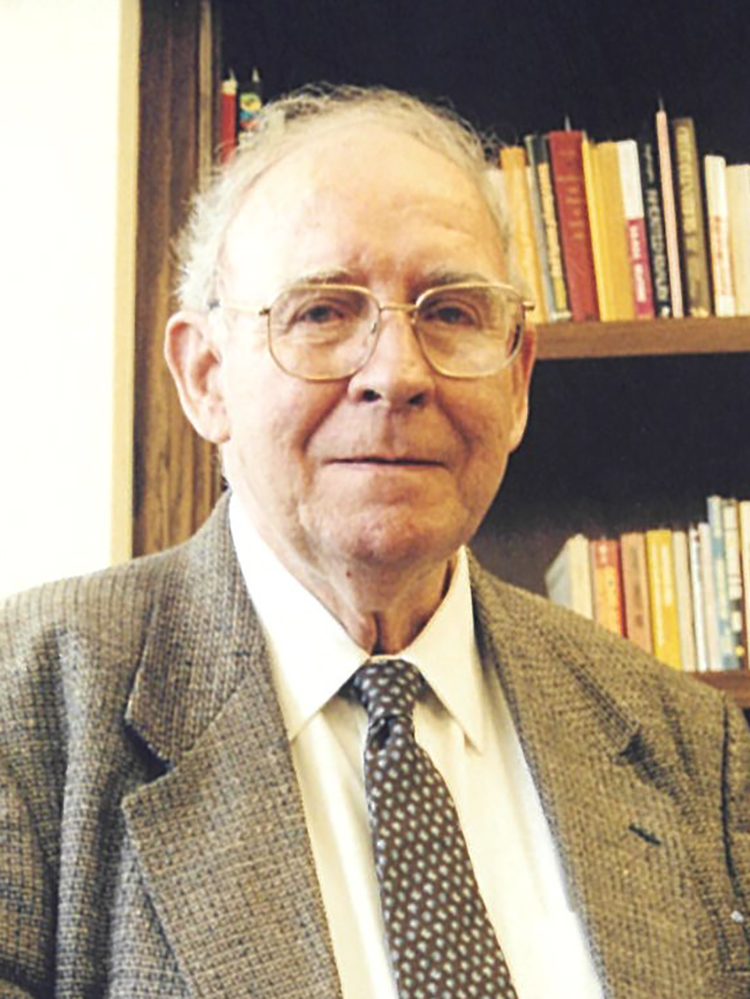
In the 1970s, Gannon was often a calming influence at UF amid student protests. Students, administrators and sometimes — but not always — law enforcement officers tended to trust his guidance. He died in 2017.
He authored numerous books, most of them focusing on Florida history. “Florida: A Short History” and “The New History of Florida” are considered must-reads for those interested in the state’s past.
After graduating from Université de Louvain in Belgium, he was ordained a priest in 1959. His first assignment was as chaplain of the brand-new St. Augustine Catholic Church and Student Center in Gainesville.
Gannon’s reach stretched beyond his church’s walls. For 12 years at the Catholic Student Center post — through the Kennedy assassinations, the Vietnam War, integration and campus strife — Gannon was a sounding board for students of all faiths on a host of issues.
During that time, he earned his doctorate in history from UF in 1962. He joined UF’s faculty in history and religion in 1967.
“They took what they taught in UF classrooms and brought it to the broader population of Florida,” said Steve Noll, Ph.D., instructional professor of history. “They convinced Floridians that there is a history here. The assumption may be that Florida is a new state, but America really started here.”
“They talked a lot about the diverse nature of Florida, from its relationship to Spanish rule, to its relationship to slavery, and its continuing transformation. They saw Florida as not just tied to Disney or the railroads of Henry Flagler, but multicultural and multiracial. All of that is instructive to our nation as a whole,” Noll said.